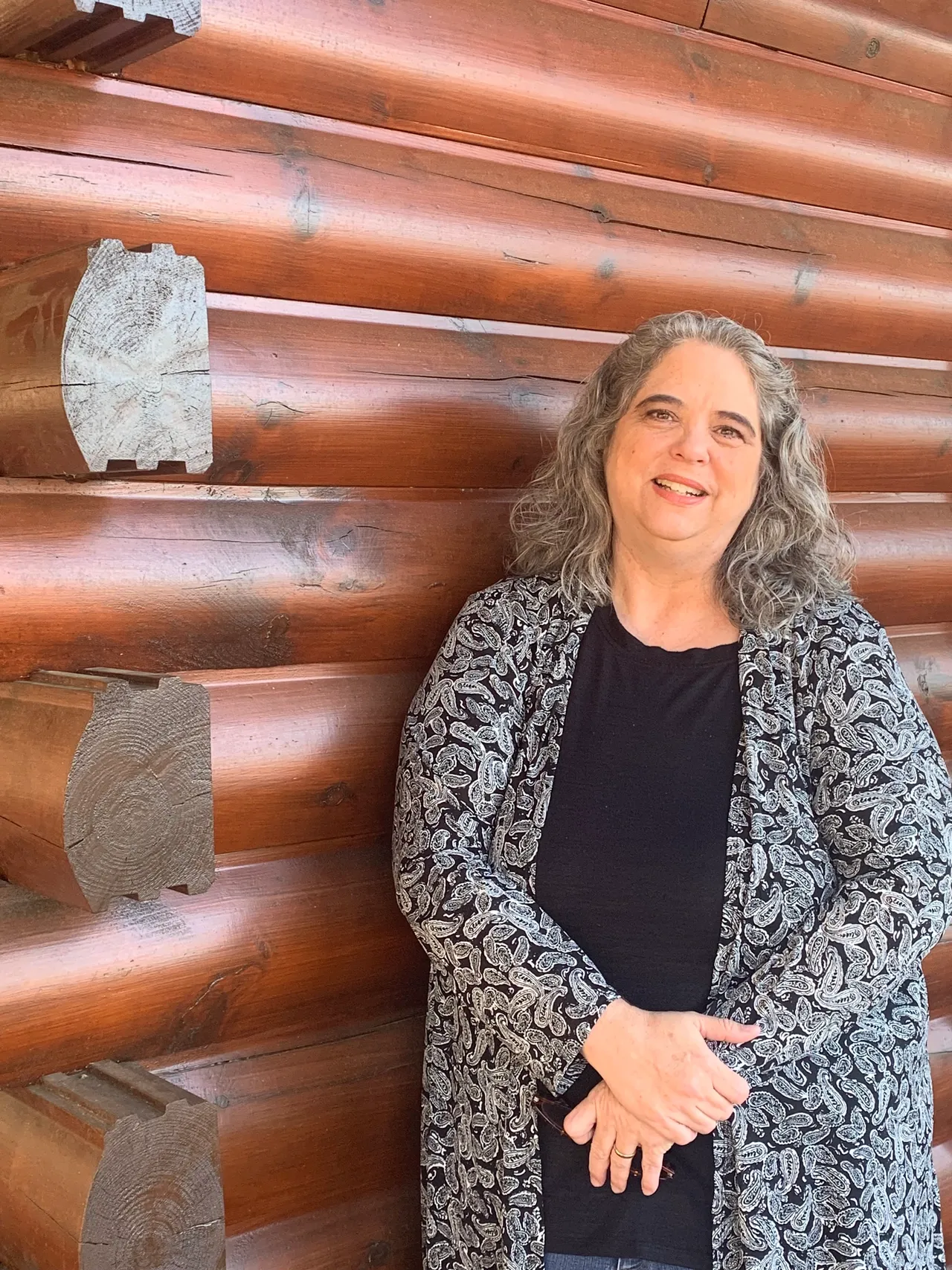
Let’s Learn About Melissa Jenkins

“I’m the worst reader in the class.” My daughter spoke casually, but the way she kept cutting her eyes, I knew these feelings ran deep. “I can’t read at all.” She’s waiting, waiting, waiting for a response. “I know, honey. We’ll work through this.” I promised I would never lie to my child. The truth was painful. She was failing kindergarten. Who does that? And her mother, a teacher! A very good teacher. It didn’t help that she had a twin sister who also was a non-reader. I’ve got twice the dilemma.
There is so much research that shows testing reading/literacy abilities as young as the age of three can predict
how well they will be doing by the age of ten. Bottom line, those who get a strong start have a much better chance of doing well in later years. This was a critical time in the lives of our children, and my husband and I needed to do something drastically different. We also had to be right the first time. We could not risk making a mistake. After crunching the numbers, it was decided. I was going to homeschool the girls.
This was not an easy decision. I was putting my career on hold. I had opportunities to move up in administration. I had no idea why my girls couldn’t read. My specialty was Deaf/Hard of Hearing students and their reading scores as a group are dismal. I didn’t know what phonics was at this point. Also at this time I did not know we were dealing with specific learning disabilities. It’s probably best I didn’t know.
I brought my girls home for first grade. If they had stayed at the private school, they would have been retained. I prayerfully looked at different curriculums and read all the reviews. Finally, I made a drastic decision. We would only do reading, writing, arithmetic. All the other skills would be supplemented here and there, but what good is it to know there are eight planets but you can’t make a grocery list? I learned about phonics and early literacy. We read for two and a half hours every day. Every. Day. Saturday is a day. Sunday is a day. I would read to them, they would read to me, they would read to each other… I also rewarded them with a later bedtime if they would go upstairs and read. How did this go? Terrible! Oh, the tears. My oldest was (and still is) a very willful person. She would try so many ways to get out of reading. I have to commend her creativity and tenacity. She had met her match, however. By December both of them were reading at an end of the year first grade level. Victory! I began to add science and social studies. They were thriving!
By the end of first grade both girls were reading at a mid-year second grade level. We were thrilled! After many discussions as a family, as parents, thorough research on our local school district, and through prayer, we decided to put them into public school. It was the best decision for us and the girls continued to thrive. Until fourth grade.
Wayne and I began to notice some behavior changes in Katie. She came home more and more withdrawn and showing signs of anxiety. Where was her vibrant laugh? We hardly heard it anymore. At times I would go to her room and literally find her under her desk, hugging a pillow. I tried to talk with her, but she couldn’t seem to put her troubles into words. I worried as I watched her little soul wilt. She began wearing over-sized hoodies she could hide in and picked gray or black clothes to wear. Here I am watching my fifth grader crumble, and all I could think of was the impact if she went to middle school. I know this is a critical time that children start to separate emotionally from their parents and peer groups become a primary influence. For the second time, Wayne and I decided it was time to homeschool. I gave Megan the option to try public school or homeschool with her sister. She chose to homeschool as well. Wayne and I got pushback from Katie. She did not want to leave her little community of friends and was sullen at first. Slowly, through discoveries we learned using hands-on activities, she came back to us. Because of the emotional turmoil that is the essence of middle school, Wayne and I chose to homeschool them for 6th, 7th, and 8th grades. As an adult Katie has come back to us and thanked us for that decision. She does not know where she would be if we had put her in public school. I shudder when I think about it.
Does that make me anti-public school? Absolutely not. Let me tell you the rest of the journey. My husband is military which means we get to move around the country. We moved to Colorado Springs, CO for their ninth-grade year. We had heard good things about the school district and felt the girls were ready for another public school try. It was the best decision we could have made. This district was amazing! I am a special education teacher but had never gotten as creative with my IEPs (Individualized Education Plans) as this district did with my girls. They both had a Specific Learning Disability in Spelling as well as cognitive processing disorder. Their intelligence was normal, but it took them much longer to process any information. Often, by the time they processed a sentence, the lesson had gone in another direction and they were lost again. We had been told over and over that they were not college material. I was not insisting that they had to go to college. We wanted them to have the skills to make that choice themselves.
At the first high school IEP meeting, their team leader said, “We’ve spent some time with your girls and strongly believe they can graduate ready to go to college with support.” As a team we decided to have them in the same classes. Most schools discourage that with twins. Since they were together, they now could utilize a full-time instructional aide that went to every class with them. If one of them got confused, they would turn around and the aide would lean in and fill in the gaps. Seriously. A full time 1:2 tutor during the lesson. Then they would go to the Special Education learning center and get further tutoring. The girls thrived there. At the awards ceremony at the end of the year they both received the Liberty Award, which is based on character and voted on by all the staff. It’s the highest honor, and also the first time they ever gave this award to two people.
I am proud of my girls. Kathleen has graduated from college and Megan has some college experience, her own house and career. I was told more than once they would never make it into college. Don’t put your trust in other people’s opinions. Do the research. Pray. You know your family. You know your child better than anyone.
My sister Kathy (she’s my twin, by the way) is also a teacher with public school, private school, and homeschool education. She’s also a recent grandmother with two babies to play with. Funny enough, these are not twins. The moms both plan to homeschool their children. Kathy and I have over 60 years of educational experience. Our hearts are to do the best we can with these little ones, so we’ve developed a fantastic 36-week curriculum for their moms. Others began to express interest, and we thought, why not make it available to other educators?
This curriculum has been researched and structured to show the best strategies for early learning in math and language. Preschoolers learn best through play, so our lessons have play in abundance. Kathy and I have put in our 60+ years of teaching experience with the latest research in what works in teaching. Did you know that teaching the letter of the week in ABC order is not best practice? Research shows that educators at school or home often still use this method because of tradition, or “that’s how it’s always been done.” Since we have sung our ABC song in that one order since the beginning of time, some think that teaching in that order is “natural.” If you stop and really examine it, however, you will see the alphabet has no rhyme or reason for the order. There is no real justification for using something so arbitrary. Our research has shown a much more effective way to teach the letter names and sounds. We will go over the specifics in a later blog, but for now, just know that there is intention behind every education decision we make.
Our preschool curriculum has 36 engaging theme that include well thought-out lessons. If you are looking for a computer-based method, this is not for you. We value the relationship between the mom/teacher and the child. It’s definitely a team effort. We also teach the teacher throughout the curriculum, so you understand why you are teaching something a specific way. We hold your hand throughout the entire journey. You can do this!
If you dedicate to follow the daily lessons and activities in Morning Meeting, Language, and Math, the expectation is that your child will be able to read simple words, count to 25, understand addition to ten, and have the skills teachers dream all children would have entering kindergarten.
In addition, we have included well planned science and social studies activities guaranteed to get your child to think on a deeper level. We also have recommended book lists each week, as well as suggested activities to do with the focus letter, number color, and shape. Songs, poems and fingerplays are theme-based and sprinkled throughout the units. Gross motor skills are also included for every day. Fine motor skills have been carefully imbedded in the activities and play. By the end of the curriculum your child will have 50 mini-books to create a lovely library to read again and again.
Our early literacy is based on the Science of Reading, which has proven to be effective when explicitly taught every day. Your child has the opportunity to learn:
Recognize 26 uppercase letters
Recognize 26 lowercase letters
Understand the phonemes (sounds) of each letter
Read beginning sounds
Read ending sounds
Read middle sounds
Read 3-letter Consonant, Vowel, Consonant (CVC) words
Recognize first name
Rhyming words
Counting words
Breaking words into syllables
-er, -est, and -ing words
Compound words
Sequencing and retelling stories
Recalling main events in a story
Answering questions about a story
Distinguishing between fiction and reality
Forming letters
Listening and following one and two-step directions
Positions
Reading is from left to right
Visual discrimination
Our math is based on a variety of the most rigorous and effective goals being used today. Your child will have the opportunity to learn:
Identify numbers to 25
Learn to count using one-to-one correspondence to 25
Count pictures to 25
Count on ten frames to 25
Count one more with pictures to 12
Count one less with pictures to 12
What number comes next? to 12
Ordinal numbers to tenth
Tally marks to 12
Days of the Week
More
Fewer
Are there enough?
Larger
Smaller
Largest
Smallest
Long and short
Tall and short
Wide and narrow
Light and heavy
Holds more or less
Compare size, weight, and capacity
Same and different
Classify by color
Classify by shape
Color patterns
Size patterns
Shape patterns
Circles
Triangles
Rectangles
Squares
Hexagon
Star
Count sides and corners
Left and right
Left, middle, and right
Our science includes carefully thought-out experiments that expose your child to thinking of a hypothesis, testing it, and pondering the results. We include appropriate social studies lessons that help your child understand his or her place in the family and community, as well as how to be a good citizen.
What’s a good curriculum without fun art and games (gross motor skills)? Fine motor skills are carefully sprinkled in each day throughout the activities. Tips and techniques are in abundance throughout the curriculum. For example, wouldn’t you like to know when you should start handwriting with your child? You might be surprised! And once you start that, how can you teach your child the proper way to hold a pencil? Gems like this are in every aspect of the curriculum.
In addition, each theme has a “Setting the Scene” portion where you can get great ideas to make the environment fit the theme and get your little one excited about learning. My sister, Kathy, and I have been teaching for over 60 years combined. We have taught in the private, public, homeschool, and university levels. Our heart is to help teachers at home as well as teachers in a professional setting. We break down difficult concepts and carefully explain what needs to be done in order to have the best teaching experience at home or in the classroom.
I honestly wish I had the curriculum when I was teaching my own little ones.