8 Effective Ways to Teach Kids Number Value
Many times a parent will say My child can count to 100! Why are we still struggling with basic math concepts? Math is not always as simple as 123s. It is actually quite complex. Numerals are symbols, of course. A child may look at a sports jersey and see the number “5” and understand that is the label for number “5.” It is not the amount. The complexity is to understand where 5 actually lives in the world.
If your child is learning to count, check out our post below for 8 hands-on ways to help your child understand the value of numbers. Or better yet, join our Facebook Group for continual support, ideas, and freebies! We love to help other teach!
Need a curriculum to help you teach? The Little Shoes Academy curriculum is full of hands-on learning, activities, colorful and simple lessons that are easy to follow. We don’t just give you the materials to teach, we teach you how to teach!
8 Ways to Teach the VALUE of Numbers…
- Take the numeral completely out of the equation. Literally. To start, stop showing the symbols. This is not the time for worksheets, flashcards and tracing numbers. Why? Because the symbols are abstract. Start counting to describe how many.
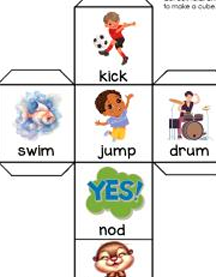
2. Children naturally have a better understanding of themselves before they understand math, so working with their bodies can be a powerful place to start. Ask your child to show me 3…
•By clapping 3 times
•Jumping 3 times
•Tapping the table 3 times
•Holding up 3 fingers
Now ask, “Was that still 3?” Remember, there is no visual representation of three at this point. You are teaching that the number stays the same even when what is done looks different. This is the beginning of a tricky concept needed in more advanced math concepts called number conservation.
3. Have your child begin to count real objects. This could include pom poms, counters, cereal, rocks, small toys, etc. Ask, Can you find out how many you have? When your child is counting, he must touch each object, move each object, and say one number per object. You are teaching another tricky concept her called one-to-one correspondence. This is the foundation of math. Ask your child, How do you know that number is 7? The answer should be Because I counted each one. Now you have a number that is a result, not a simply sing-song chant kids randomly do if they are not careful.
You will know you are successful when you ask your child What does 5 mean? And she answers Five things. If they answer Because it comes after 4, this concept has not been mastered yet. Keep working at it.
4. Once one-to-one correspondence is understood, we are ready to move to symbols. After many, many repetitions with real amounts, place 4 objects on the table. Then write 5. Say, This is a math shortcut. Instead of drawing 5 things, we can write this symbol. This stands for five objects. The child is beginning to understand that the symbol is a code, not the number itself.
5. Adding a new layer, help your child understand that the number stays the same in different settings. Put 5 objects very tightly in a pile on the table and have your child count. Spread them apart and ask Is it still 5 or did it change? Numbers don’t care about space. They care about how many. This is teaching number conservation, which is one of the strongest predictors of later math success.

6. The next concept is to compare numbers. You want to make sure your child understands more than just 5. Where does 5 live in the world? Numbers become more meaningful then. Start by giving your child 2 different amounts. 4 linking cubes and 7 linking cubes in two groups, for example. Ask which is more? How do you know? The second question is critical. You want your child to prove it. Here are some ways to prove it. One way to prove it is to line up the pairs and match one-to-one and see the group of 7 has more left over.
7. We are jumping to a very important concept, which is that numbers can be grouped together. Start by building 6 + 2 with counters. Put them together and add. Do the same problem by drawing circles. Finally, write 6 + 2 = and solve. Never jump to symbols first. This helps the child to understand the concept and not just memorize procedures. There is a name for this… “worksheet math child.” That child may be able to answer questions, but has no number sense.

8. The final skill is called subitizing. If you can flash a card with dots (like dice) for 2 seconds. For example:
Then hide it. Ask, How many did you see? This skill is huge for addition and later multiplication.
If you like these ideas, you’ll really LOVE the support we provide in our Facebook Group! Check us out, we just love to support parents and preschool and elementary teachers!

Click the image to download your free math activities now!
By laying a strong foundation, you are teaching necessary skills that your child will be able to use to build more difficult math concepts. Many second graders can count to 100, but still don’t understand what the number 8 actually is. Instead of letting your child just memorize and recite numbers, you are teaching that numbers are measurable, comparable, constant and useful.
Once a child truly understands numbers as amounts, addition and subtraction suddenly make sense.
Need more help homeschooling? Check out our amazing resources! Give your child the tools they need to succeed with the Little Shoes Academy homeschool program!
Featured products
-
First Grade – Full Curriculum
Original price was: $199.00.$99.00Current price is: $99.00. -
Kathy Books – First Grade
$29.00 -
Kindergarten – Full Curriculum
Original price was: $199.00.$99.00Current price is: $99.00. -

Motivation Packet
$2.00 -
Number Sense to 20
$6.00